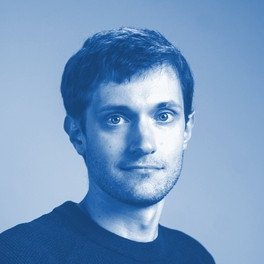
Antoine Vigouroux
Research scientist · AI safety & mechanistic interpretability
Email: the first three letters of my first name, then the first three of my last name, at pm.me
Hi, I’m Antoine. I’m working on mechanistic interpretability as a MATS scholar. My current research goal is to identify the mechanisms that LLMs use to process information, by extracting them directly from the weights.
Before that, I did a PhD in biophysics at Institut Pasteur, building CRISPR tools to study the morphogenesis of bacteria, and a postdoc at Harvard Medical School, where I built machines that keep bacteria growing continuously for years, so we can see evolution happen in real time (120,000+ generations so far). I also write Telescopic Turnip, a blog about science, progress and the strange rules that shape daily life.
The best way to reach out is by email, or by DM on the Open Source Mech Interp Slack. If you're working on an exciting research project, I'd love to hear about it!
AI safety
-
Targeted recovery of weight-space mechanisms from neural networks
Introduces Targeted Parameter Decomposition, a method to extract only the mechanisms that process specific inputs of interest, making parameter decomposition affordable at scale. Now a supported feature in Goodfire’s parameter decomposition library.
-
Making sense of parameter-space decomposition
An accessible explainer of parameter decomposition – an approach for breaking neural networks into interpretable mechanisms – starting from "what even is a mechanism?"

Biology
-
Tuning dCas9's ability to block transcription enables robust, noiseless knockdown of bacterial genes
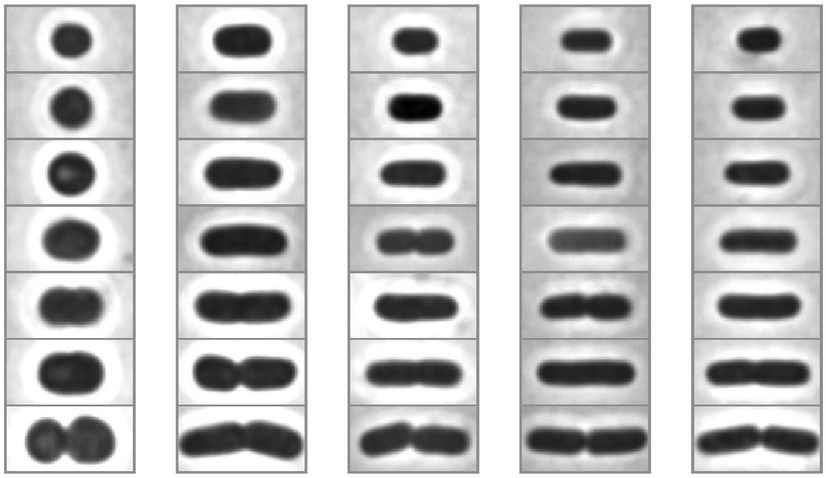
Taking control over the shape of bacilliform bacteria through genetic engineering -
A CRISPRi screen in E. coli reveals sequence-specific toxicity of dCas9
-
Class-A penicillin binding proteins do not contribute to cell shape but repair cell-wall defects
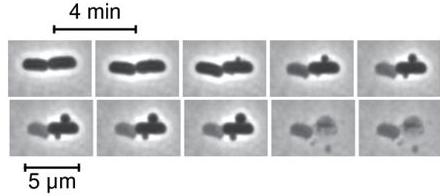
Different mechanisms control cell shape at different spatial scales -
60,000 generations of evolution in perpetual exponential growth
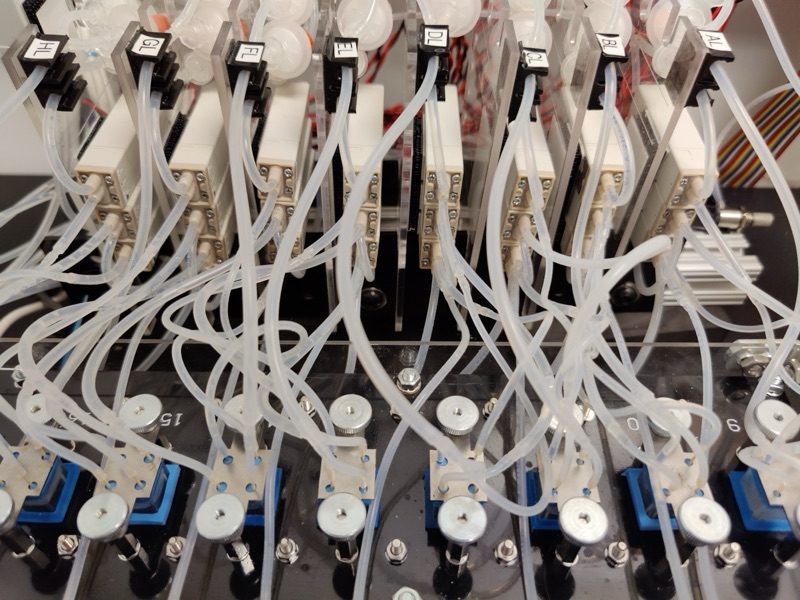
Detail from an evolution machine. The experiment is still running to this day.
Writing
-
How Φ80 infiltrates research labs (Asimov Press, 2026)
How a stealth bacteriophage invades research labs by hitch-hiking with molecular biology techniques.

-
My journey to the microwave alternate timeline (2026) Curated on LessWrongSelected by LessWrong's moderators; a few posts are curated each week
Exploring the abandoned branch of the tech tree where the microwave replaced the stove.
“One of the most fun LW posts I've read in a while.” — Neel Nanda
-
Mechanisms too simple for humans to design (2025) Featured in Substack's official newsletterThe Weekender, Feb 1 2025, headlined with a quote from this post: “You are simpler than Microsoft Word”
Humans don’t know how to build butterflies, not because butterflies are too complex, but because they are too simple.

-
This is already your second chance (2024) 4 chocolate bars receivedThe post argued that readers could save the world by putting a chocolate bar under a specific statue in Boston. I found four.
Short story. The last emperor of Earth gets to give exactly one command to a superintelligent machine.
-
There is way too much serendipity (2024) Best of LessWrong 2024 CuratedSelected by LessWrong's moderators; a few posts are curated each week
Almost every artificial sweetener was discovered by chemists accidentally eating their work in progress.
-
The Talk: a brief explanation of sexual dimorphism (2023) Best of LessWrong 2023 CuratedSelected by LessWrong's moderators; a few posts are curated each week
A bottom-up explanation of why the linear structure of DNA inevitably lead to the evolution of sexual reproduction, and how life became weirder as a result.

-
Do bamboos set themselves on fire? (2022)
Why some bamboos flower only once every 120 years then die all at once, and why forest fires might be part of their reproductive strategy.